
where to get Cocaine in Palermo/Cocaine in Sicily’s Historic Capital
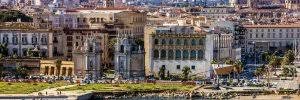
Palermo, the vibrant and complex capital of Sicily, presents a cocaine market profoundly shaped by Cosa Nostra’s historical control, the city’s strategic position in Mediterranean transit routes, and deep socio-economic contradictions. The city’s status as a major southern Italian port, a tourist destination with a rich cultural heritage, and a place where formal state authority has historically contended with mafia power creates a unique drug landscape. According to the Italian National Institute of Health, cocaine purity in Palermo shows extreme variation, from 30-50% in poorer neighborhoods to 70-80% in affluent and tourist zones, reflecting market segmentation and organized crime’s price discrimination strategies. The market exhibits patterns influenced by tourism, local consumption among both elite and marginalized populations, and Palermo’s role as a redistribution point for Sicily and beyond. Despite decades of anti-mafia efforts, the cocaine trade remains a pillar of organized crime revenues, deeply embedded in the social and economic life of a city forever marked by the struggle between legality and illegality. where to get Cocaine in Palermo. where to get Cocaine in Palermo. where to get Cocaine in Palermo. where to get Cocaine in Palermo. where to get Cocaine in Palermo. where to get Cocaine in Palermo. where to get Cocaine in Palermo. where to get Cocaine in Palermo. where to get Cocaine in Palermo. where to get Cocaine in Palermo. where to get Cocaine in Palermo. where to get Cocaine in Palermo. where to get Cocaine in Palermo. where to get Cocaine in Palermo. where to get Cocaine in Palermo
Historical Development and Mafia Dominance &where to get Cocaine in Palermo
Cocaine’s history in Palermo is a chapter in the long history of Cosa Nostra’s control over vice and contraband. While the mafia’s initial fortunes were built on tobacco smuggling and later heroin trafficking in the 1970s and 80s, a decisive shift occurred in the 1990s. As heroin markets stabilized and law enforcement pressure increased, Cosa Nostra clans aggressively moved into cocaine importation, leveraging their control of Palermo’s port and established European distribution networks. The early 2000s saw consolidation, with cocaine becoming the primary revenue source for mafia families, funding corruption and territorial control. Since 2010, wastewater analysis has shown Palermo’s cocaine consumption is among the highest in southern Italy, with worrying trends of use spreading to younger demographics. The Italian Drug Report 2025 notes that while high-level mafia control has been fractured by major trials, the cocaine market has fragmented into a more competitive, and at times more violent, landscape controlled by various clans and emerging local groups, adapting to new smuggling methods and digital sales platforms. where to get Cocaine in Palermo. where to get Cocaine in Palermo. where to get Cocaine in Palermo. where to get Cocaine in Palermo. where to get Cocaine in Palermo
Legal Framework and the Anti-Mafia Struggle
Drug enforcement in Palermo cannot be separated from the decades-long fight against Cosa Nostra. Italy’s drug laws are applied within this context, with the Direzione Investigativa Antimafia (DIA) and the Palermo Prosecutor’s Office playing leading roles. Enforcement strategies are exceptionally complex, combining traditional narcotics policing with sophisticated anti-mafia methodologies, including financial investigations, witness protection programs (like the famous *pentiti*), and the seizure of mafia assets. A unique legal tool is the use of “mafia association” charges alongside drug trafficking charges, leading to much heavier sentences. Despite these powerful tools, challenges remain monumental: deep-seated corruption in some port and municipal agencies, intimidation of witnesses and merchants, and the mafia’s ability to adapt its business models. Recent successes have been significant but are often followed by violent competition to fill power vacuums. The application of Italy’s personal use decriminalization is also uneven in Palermo, with marginalized users often facing greater police attention than affluent ones.
Market Structure and Clan-Controlled Segmentation
Palermo’s cocaine market is a textbook example of organized crime segmentation. Wholesale importation uses the Port of Palermo but increasingly also relies on smaller marinas along the coast, fast boats from North Africa, and concealment in commercial air cargo. Different mafia clans or local gangs control specific *mandamenti* (districts) of the city: the historical center, the ZEN and Brancaccio suburbs, the Mondello tourist area, and the port itself. Mid-level distribution is tightly managed within these territories, with wholesale product trickling down to trusted cell leaders. Retail distribution occurs through: controlled dealing spots in specific piazzas and alleyways, delivery services run via disposable phones, connections through bars and clubs that pay *pizzo* (protection money), and social supply within closed circles. Prices are highly variable: €40-€60 for low-purity product in poor suburbs, €80-€100 for high-purity product in affluent Viale della Libertà or for tourists in Mondello. The market is cash-intensive and still relies heavily on face-to-face trust and intimidation, though digital methods are gaining ground.
User Demographics and Social Divide
Cocaine use in Palermo starkly mirrors the city’s social and economic divides. Primary user groups are bifurcated: an affluent demographic of professionals, businesspeople, and university students from middle-class families, and a marginalized demographic in the vast, underserved suburbs, where use is often linked to petty crime and social despair. Consumption settings are worlds apart: luxury villas in the foothills of Monte Pellegrino, upscale bars in the Politeama area, and private beach clubs versus public housing project stairwells, abandoned buildings, and certain desolate piazzas in the peripheries. A disturbing trend noted by social workers is the “verticalization” of use, where cocaine from the same batch moves from affluent neighborhoods to poor ones, often stepped on multiple times along the way. Polydrug use is rampant, with cocaine commonly mixed with alcohol, cannabis, and, in marginalized settings, cheap synthetic drugs or prescription medications. The social ritual of the *passeggiata* (evening stroll) in Via Principe di Belmonte or Via Roma sometimes masks discreet drug-related interactions.
Health Services in a Challenged System
Palermo’s health services for drug-related issues operate under the strain of Sicily’s underfunded regional healthcare system and complex social problems. The Policlinico Paolo Giaccone University Hospital handles emergencies, but its toxicology unit is often overwhelmed. Addiction services (SERD) exist but are geographically uneven and suffer from staffing shortages. Harm reduction is limited; while some needle exchange operates, supervised consumption sites and widespread naloxone distribution are absent. A significant challenge is reaching the marginalized user population in the suburbs, where stigma, fear, and lack of transportation prevent access to care. Community-based organizations and some church-affiliated groups provide crucial outreach but with minimal resources. A particular issue is the lack of integrated mental health care, as cocaine use is frequently comorbid with trauma and depression, especially in communities burdened by mafia violence and poverty. Efforts to build trust between health services and these communities are ongoing but slow.
Law Enforcement Strategies in Mafia Territory
Policing the cocaine market in Palermo is a high-stakes, dangerous endeavor deeply integrated with anti-mafia operations. Strategies include long-term infiltration, massive electronic surveillance operations, and the meticulous mapping of clan relationships and money flows. The seizure of assets—from pizzerias to luxury apartments—is a key tactic to dismantle the economic power of trafficking networks. A unique aspect is the focus on “grey zone” entrepreneurs and professionals who facilitate the trade through legitimate businesses. Challenges are constant and severe: the threat of retaliation against officers and judges, the mafia’s deep infiltration of certain economic sectors, and the difficulty of securing convictions when witnesses are terrified. Recent years have seen a shift towards targeting the younger, more digitally-savvy generation of traffickers while maintaining pressure on traditional clan structures. Operations like “Galassia” in 2024, which dismantled a network using encrypted apps and cryptocurrency to distribute cocaine from South America to Palermo and onward to Northern Europe, demonstrate this evolving focus.
Visitor and Cultural Considerations
For tourists, Palermo’s cocaine market is largely invisible but presents unique risks. While the historic center is generally safe for visitors, any attempt to seek out drugs dramatically increases the risk of entanglement with criminal networks that do not distinguish between a tourist and a police informant. The risk of severe adulteration or robbery is high. Tourists should also be acutely aware of Italy’s drug laws; an arrest, even for small amounts, can lead to lengthy legal proceedings far from home. Furthermore, spending money in establishments that may be paying *pizzo* indirectly supports the criminal structures that control the drug trade. Palermo’s incredible cultural vibrancy, from its street markets to its Baroque churches, exists alongside these shadow economies. The most respectful and safe approach for visitors is to engage deeply with the city’s legitimate cultural and culinary offerings while maintaining a clear understanding of the very real and present power of organized crime.
Economic Impact in a Contested Economy
The economic impact of cocaine in Palermo is profound, representing a parallel economy that both sustains and cripples the city. Estimates suggest the retail cocaine market is worth well over €100 million annually in Palermo alone, not counting its regional distribution function. This illicit capital fuels money laundering in real estate, hospitality, and retail, distorting markets and creating unfair competition for honest businesses. Positive effects in a narrow sense include cash flow in struggling neighborhoods and illicit employment. The negative impacts, however, are catastrophic: they perpetuate mafia control, fund corruption that undermines public institutions, generate violence that scars communities, and create public health crises. The “AddioPizzo” (Goodbye Protection Money) movement symbolizes the civil society fightback, encouraging consumers to support businesses that refuse to pay *pizzo*. Policy is a constant balancing act between aggressive repression and the need for social and economic development that provides alternatives to mafia recruitment. The future of Palermo’s relationship with cocaine is inextricably tied to the success of its ongoing, courageous struggle to build a fully legal and transparent economy.
Outstanding customer service from Mathewcokehouse@gmail.com. Professional, reliable, and always willing to help. Highly recommended.
Excellent delivery service! My order arrived quickly and in perfect condition. Highly recommended.
mathewcokehouse@gmail.com
I was honestly impressed with how fast everything moved. After I made my payment, my delivery arrived in just about an hour. The whole process was quick and smooth, and I was kept informed along the way. Big thanks to Mathewcokehouse@gmail.com for the fast service and prompt delivery. I really appreciate the efficiency and would definitely recommend the service based on my experience.
Mathew is simply the best around the country! Every experience I’ve had with him has been outstanding. He’s reliable, professional, and always keeps his word. Whenever he says delivery will take one hour, he always arrives on time without fail. It’s hard to find someone this dependable these days. I highly recommend Mathew ( Mathewcokehouse@gmail.com) to anyone looking for fast, trustworthy, and excellent service. Keep up the amazing work!