
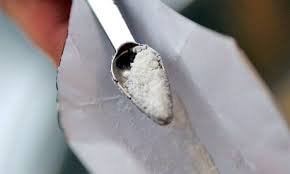
Where To Get Cocaine in Madrid/Cocaine in the Spanish Capital
Madrid, the bustling capital and geographical heart of Spain, presents one of Europe’s largest and most dynamic cocaine markets, characterized by massive scale, diverse consumer bases, and a complex interplay between open social use and sophisticated organized crime. The city’s status as the political, financial, and cultural nucleus of the nation creates a drug landscape where demand spans from government elites and bankers to students and immigrants, all served by a market of immense volume and organizational depth. According to the Spanish Observatory, cocaine purity in Madrid averages 60-77% at retail, supplied through multiple channels including Madrid-Barajas Airport (a major European hub) and overland distribution networks. The market exhibits colossal, stable year-round demand, with the famous “Madrid nunca duerme” (Madrid never sleeps) nightlife providing a constant backdrop. Operating under Spain’s decriminalization model, cocaine in Madrid is a social fact, deeply woven into the fabric of the capital’s legendary street life and private gatherings, presenting authorities with a monumental challenge of scale in both law enforcement and public health.
Historical Development and Capital City Dynamics & Where To Get Cocaine in Madrid
Madrid’s position as the capital has always attracted vice and commerce. During the Franco dictatorship, drug use was suppressed, but the city’s underground culture persisted. The post-Franco “Movida Madrileña” of the late 1970s and 80s was a cultural explosion of hedonism where drugs, including cocaine, began to feature in artistic and nightlife circles. The establishment of Madrid as a major global air hub and the economic growth of the 1990s and early 2000s expanded the market dramatically. Cocaine transitioned from a counter-cultural symbol to a mainstream commodity across social classes. The 2008 financial crisis did little to dent demand, highlighting its entrenched nature. The 2010s saw further sophistication, with the city becoming a key European distribution node. Wastewater analysis consistently places Madrid at the top tier of European cocaine consumption. The 2024 government report underscores Madrid’s dual role: as Spain’s single largest consumption market and a critical logistical and financial center for cocaine trafficking organizations operating across the continent. Where To Get Cocaine in Madrid. Where To Get Cocaine in Madrid. Where To Get Cocaine in Madrid. Where To Get Cocaine in Madrid. Where To Get Cocaine in Madrid .Where To Get Cocaine in Madrid. Where To Get Cocaine in Madrid. Where To Get Cocaine in Madrid. Where To Get Cocaine in Madrid. Where To Get Cocaine in Madrid. Where To Get Cocaine in Madrid. Where To Get Cocaine in Madrid. Where To Get Cocaine in Madrid. Where To Get Cocaine in Madrid. Where To Get Cocaine in Madrid. Where To Get Cocaine in Madrid
Legal Framework and Metropolitan Policing Complexities
Spain’s legal model of decriminalized private use but penalized public consumption and sale applies in its most complex form in Madrid. The city hosts the national government, the royal family, and countless diplomatic missions, creating layers of jurisdiction and sensitivity. Policing involves the National Police, the Madrid Municipal Police, and the Civil Guard in the periphery. Enforcement priorities are multifaceted: securing Barajas Airport as a major entry point, disrupting the violent street gangs that control retail in certain districts, and managing the vast nightlife economy. Fines for public consumption are issued, but in a city of millions with a vibrant street culture, enforcement is necessarily selective. The focus is on maintaining public order and targeting commercial-scale trafficking. The “Ley de Seguridad Ciudadana” (Citizen Security Law, dubbed the “Gag Law”) is used to fine consumption in public spaces, but its application is inconsistent. The sheer size of Madrid makes comprehensive drug policing impossible, leading to a strategy focused on high-value targets and hotspot management.
Market Structure: A Metropolis of Micro-Markets
Madrid’s cocaine market is not monolithic; it is a constellation of interconnected micro-markets serving different demographics. Wholesale importation exploits Barajas Airport (air cargo, passenger mules) and road transport from ports like Algeciras and Barcelona. This supply feeds a highly segmented retail landscape. In affluent neighborhoods like Salamanca and Chamberí, access is through discreet delivery services and private social networks. In the legendary nightlife districts of Malasaña, Chueca, and Huertas, street-level dealing is more visible, with approachable dealers and bar connections. In the immigrant-heavy southern districts like Usera and Villaverde, retail may be controlled by specific ethnic gangs. Delivery via apps is ubiquitous city-wide. Prices are moderate and competitive: €50-€70 per gram. The market’s defining feature is its sheer size and segmentation, able to cater to a diplomat in a penthouse, a student in a basement flat, and a tourist in a hostel with equal, ruthless efficiency, all within a few metro stops of each other.
User Demographics: A Cross-Section of the Nation
Cocaine use in Madrid cuts across every segment of Spanish society and its international community. Primary user groups include: politicians, senior civil servants, and media figures; bankers and corporate executives from the financial district; the massive student population from multiple universities; the thriving international expat and diplomatic communities; working-class Madrileños across the city; and the endless stream of domestic and international tourists. Consumption settings are as varied as the city itself: in the throbbing discotecas of Kapital and Teatro Barceló, in the traditional “verbenas” (street festivals), in private clubs and luxury apartments in the Castellana, in the packed “terrazas” (terraces) of summer, and in the ubiquitous bars of every neighborhood. The “botellón” culture is widespread. Polydrug use is standard, with cocaine paired with alcohol (gin-tonics, beer, wine) and, in club settings, other stimulants and psychedelics. The user base is vast, diverse, and considers cocaine a normalized, if illegal, part of the capital’s social currency.
Health Services in the National Capital
Madrid is the headquarters of Spain’s national health system and boasts some of the country’s best hospitals, like Hospital Gregorio Marañón and Hospital 12 de Octubre. Addiction services are provided through the Madrid Health Service’s network of CATs (Centros de Atención a las Adicciones). Harm reduction exists but is not as developed as in some autonomous regions; there are no official drug consumption rooms in Madrid, and drug-checking is limited. Needle exchange and overdose prevention programs operate. The system’s scale is both a strength and a weakness: it has vast resources and expertise, but it is also bureaucratic and can be difficult to navigate, especially for marginalized users or foreigners. Prevention campaigns are run, but they are lost in the noise of the metropolis. The main challenge is the disconnect between the massive, hidden population of recreational users and a healthcare system geared toward treating addiction pathology. For a user in crisis, emergency care is excellent, but proactive engagement and early intervention are minimal.
Law Enforcement Strategies and the Scale Problem
Policing the Madrid market is an exercise in managing overwhelming scale. The National Police’s Central Narcotics Brigade leads high-level investigations into international networks using the airport and capital as a base. The Municipal Police manage the daily reality of public order in neighborhoods and nightlife zones. A significant focus is on combating the Latin American gangs (like the Dominican Trinitarios) that control violent street retail in certain areas, leading to periodic large-scale raids and deportations. During major events and summer, police presence is amplified in hotspots like Plaza Mayor and Retiro Park. However, the strategy is fundamentally reactive and resource-constrained. The “war on drugs” in Madrid is a war of attrition, with police scoring significant seizures (hundreds of kilos at the airport) but failing to make a dent in retail availability or social demand. Corruption within law enforcement, while not as systemic as elsewhere, is a persistent concern given the sums of money involved. Success is measured in seizures and the prevention of gang warfare, not in market suppression.
Visitor and Resident Considerations
For visitors and residents, Madrid offers extremely easy access to cocaine, but this accessibility is a trap. The market is saturated, competitive, and often violent at the supply level. Street deals carry a high risk of being short-changed, sold adulterated product, or robbed. The legal risk, while low for discreet private use, is real for public consumption (fines) and catastrophic for any involvement in supply. For students and professionals, a drug conviction can ruin careers. The health risks are severe due to unknown cutting agents and the culture of mixing with heavy alcohol consumption. Medical services are top-notch but will involve police if the incident is public. The key consideration is that Madrid’s incredible energy and 24-hour culture can make drug use seem like a natural part of the experience. This is an illusion. The market is a dangerous criminal enterprise, and participation supports it. Enjoying the city’s world-class art, food, and atmosphere requires no chemical enhancement, and pursuing it dramatically increases personal risk in a city where the consequences can be severe.
Economic Impact in the National Engine
The economic impact of cocaine in Madrid is colossal. The illicit market moves hundreds of millions of euros annually, money that launders through the city’s real estate, hospitality, and luxury goods sectors, potentially distorting the economy. The positive economic spillovers are minimal compared to the costs: immense spending on law enforcement and judiciary, healthcare burdens, lost productivity, and the social cost of addiction and related crime. The city’s brand as a safe, vibrant European capital is perpetually at risk from drug-related violence and degradation of public spaces. Policy debates are intense but hampered by the complexity of jurisdiction and scale. The current strategy, led by the Government Delegation for the National Plan on Drugs, involves a mix of airport interdiction, gang disruption, and public health messaging. The fundamental challenge for Madrid is that it is the heart of the Spanish state, and the cocaine market is a powerful counter-current running through that heart. Addressing it requires not just policy changes, but a societal reckoning with a level of normalized use that defines, and threatens, the very character of the capital.
The contact was super helpful offering recommendations, I love the variety, vibe and overall experience. I’m not from here just visiting &
Mathewcokehouse@gmail.com
made me feel so comfortable! Definitely will be back. Thank you all for the recommendation
The contact was super helpful offering recommendations, I love the variety, vibe and overall experience. I’m not from here just visiting &
Mathewcokehouse@gmail.com
made me feel so comfortable! Definitely will be back. Thank you all for the recommendation
Fast, reliable, and professional. Mathewcokehouse@gmail.com delivered my order without any issues, and the quality of service exceeded my expectations. I highly recommend them to anyone looking for dependable deliveries.
I was honestly impressed with how fast everything moved. After I made my payment, my delivery arrived in just about an hour. The whole process was quick and smooth, and I was kept informed along the way. Big thanks to Mathewcokehouse@gmail.com for the fast service and prompt delivery. I really appreciate the efficiency and would definitely recommend the service based on my experience.
Mathew is simply the best around the country! Every experience I’ve had with him has been outstanding. He’s reliable, professional, and always keeps his word. Whenever he says delivery will take one hour, he always arrives on time without fail. It’s hard to find someone this dependable these days. I highly recommend Mathew ( Mathewcokehouse@gmail.com) to anyone looking for fast, trustworthy, and excellent service. Keep up the amazing work!