
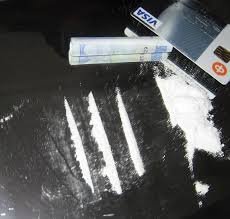
Where To Get Cocaine in Zaragoza/Cocaine in Spain’s Inland Crossroads
Zaragoza, the historic capital of Aragon and a major logistical hub in northeastern Spain, presents a steady, locally-focused cocaine market shaped by its inland position, industrial economy, and significant student population. The city’s identity as a key transportation node between Madrid, Barcelona, and the Basque Country, and as a center for manufacturing and trade fairs, fosters a drug market characterized by reliable supply and consistent demand, with less tourist distortion than coastal cities. According to Spanish health data, cocaine purity in Zaragoza averages 57-74%, supplied efficiently via the extensive road and rail networks that converge in the city. The market exhibits stable, high year-round consumption, driven by local social life, the university, and the calendar of professional events at the Feria de Zaragoza exhibition center. Operating within Spain’s decriminalization framework, cocaine use in Zaragoza is discreet but normalized within its nightlife districts like El Tubo and the university area, reflecting the pragmatic, no-nonsense character of this influential inland city. Where To Get Cocaine in Zaragoza . Where To Get Cocaine in Zaragoza. Where To Get Cocaine in Zaragoza. Where To Get Cocaine in Zaragoza. Where To Get Cocaine in Zaragoza. Where To Get Cocaine in Zaragoza. Where To Get Cocaine in Zaragoza. Where To Get Cocaine in Zaragoza. Where To Get Cocaine in Zaragoza. Where To Get Cocaine in Zaragoza. Where To Get Cocaine in Zaragoza. Where To Get Cocaine in Zaragoza
Historical Development and Logistic Hub Growth
Zaragoza’s strategic location has made it a crossroads for millennia. Its modern cocaine market developed in tandem with its 20th-century industrial and infrastructural growth. The city became a major military and industrial center under Franco. Post-dictatorship, it evolved into a key logistics and trade fair location. Cocaine entered in the 1980s and 1990s, initially within business and more affluent circles connected to the exhibition industry. The expansion of the University of Zaragoza brought a large student population. The 2000s, with the development of the high-speed rail (AVE) connection and the Logistics Platform (PLAZA), solidified Zaragoza’s role as a distribution nexus, a fact not lost on drug trafficking networks. The 2008 Expo provided a temporary tourism boost. The 2010s saw the market mature, serving a loyal local base. Wastewater data places Zaragoza among Spain’s higher-consumption cities, notable for its stability rather than dramatic peaks. The 2024 report highlights Zaragoza’s role as a critical inland distribution point for cocaine moving between the Catalan coast, the Basque Country, and Madrid, leveraging its exceptional transport infrastructure.
Legal Framework and Inland Enforcement &
Where To Get Cocaine in Zaragoza
Spain’s national laws are enforced by the National Police and the Local Police in Zaragoza. The city’s lack of mass tourism allows for a more consistent application of the rules. Fines for public consumption in areas like El Tubo (the famous tapas bar district) and Plaza de España are issued with regularity. Police focus on disrupting the supply chains that use the city’s road and rail networks, conducting checks on vehicles and freight. The presence of the major trade fair (Feria de Zaragoza) creates temporary, mini-peaks in demand during large events, which police anticipate with increased presence. However, unlike coastal or festival cities, there is no extended period of de facto legal suspension. Enforcement is steady and pragmatic, reflecting the city’s business-like character. The legal environment feels more present and consistent than in tourist zones, though the fundamental decriminalization of private possession still protects users in their homes.
Market Structure and Distribution Efficiency
Zaragoza’s cocaine market is efficient and deeply integrated into the city’s logistics ecosystem. Wholesale supply arrives by road from Barcelona, Valencia, and the Basque Country, often concealed in legitimate freight. The city’s role as a distribution center means some product is warehoused before being moved on to other regions. Mid-level distribution is controlled by well-organized local groups. Retail is reliable and low-key: delivery services via encrypted apps are highly organized; social supply within the large student and professional communities is dominant; connections are made in specific bars in El Tubo and the university district (San Francisco); street dealing exists but is discreet. Prices are fair and stable: €50-€70 per gram. The market’s defining feature is its logistical efficiency and focus on serving a stable local population. It lacks the brazen tourist-facing element of coastal markets, operating instead on principles of reliability and discretion suitable for a community where people know each other and reputations matter.
User Demographics: Students, Workers, and Professionals
Cocaine use in Zaragoza is concentrated in its core demographic groups. Primary users include: students from the large University of Zaragoza, industrial and logistics sector workers with disposable income, professionals linked to the trade fair and business services, and the general population engaged in the city’s vibrant tapas and nightlife culture. Consumption is social and integrated into local rituals: in the crowded tapas bars of El Tubo, at university parties and residencies, in private apartments in neighborhoods like Delicias and Actur, and at social gatherings following football matches of Real Zaragoza. The culture is one of sustained socializing rather than binge tourism. Polydrug use typically involves cocaine with alcohol, especially beer, wine, and the local “porrón” sharing vessel. The user base is predominantly local or regional, grounded, and views drug use as a private aspect of social life, not a transgressive holiday activity.
Health Services in a Major Regional Capital
Zaragoza is the medical hub for the Aragon region, with the Hospital Universitario Miguel Servet providing comprehensive care. Addiction services are available through the regional network, with a standard Spanish focus on treatment rather than harm reduction. Services are competent but not particularly innovative. The city does not face the extreme seasonal crises of festival cities, allowing for a more steady-state approach to healthcare. However, this can lead to complacency; the high baseline level of cocaine use still generates significant health costs and emergencies. Harm reduction initiatives are limited. Prevention campaigns are run in schools and at the university. The system’s challenge is addressing a pervasive, normalized level of use that doesn’t create dramatic headlines but steadily erodes public health. It is a system designed for pathology, not for engaging the large recreational user population that may not seek help until a serious problem develops.
Law Enforcement Strategies and Transport Interdiction
Law enforcement strategy in Zaragoza leverages the city’s transport role. The National Police and Civil Guard conduct frequent operations on the AP-2 and A-23 motorways, as well as at the rail yard and airport, targeting drug shipments in transit. Within the city, police maintain order in nightlife areas and issue fines for public consumption. A significant focus is on the trade fair center during major events, where temporary increases in demand can attract outside dealers. The approach is intelligence-led and persistent rather than flashy. There is less pressure to tolerate visible use for tourism’s sake. This creates a market that is more controlled and less violent than in some Spanish cities, but no less available to those who seek it through the right channels. Success is measured in intercepted shipments and low rates of drug-related violence, rather than in reducing overall prevalence, which remains stubbornly high.
Visitor and Student Considerations
For visitors (mainly business travelers) and students, Zaragoza’s cocaine market is accessible but requires local knowledge. It is not a tourist bazaar; cold approaches on the street are unlikely to succeed and may be risky. The legal framework is the standard Spanish model, with fines for public consumption. For students, involvement can have academic and social repercussions in a city where networks are tight. The health risks are the same as elsewhere: unknown adulterants and dangerous interactions with alcohol. The medical response is good. The key consideration is that Zaragoza is a genuine, working Spanish city where drug use is woven into the social fabric but is not the city’s raison d’être. The market serves locals first. Outsiders attempting to access it may find it opaque and may be more easily exploited due to their lack of connections. Enjoying Zaragoza’s superb tapas, impressive architecture (like the Basilica del Pilar), and authentic atmosphere does not require, and is better without, involvement in its discreet but pervasive drug economy.
Economic Impact in a Logistics Powerhouse
The economic impact of cocaine in Zaragoza is significant but integrated into the city’s legitimate economic flows. The illicit trade generates substantial revenue, and its logistics likely exploit the same infrastructure that makes the city an economic success. This creates a perverse synergy. The negative impacts include healthcare costs, law enforcement expenditures, and lost productivity. The city’s brand as an efficient, modern hub for industry and logistics could be tarnished if association with drug trafficking becomes prominent. Policy follows the national model without the seasonal exceptions of festival cities. The current strategy involves transport interdiction and maintaining public order. The fundamental challenge for Zaragoza is that its greatest economic strength—its connectivity and logistics prowess—is also its greatest vulnerability to exploitation by the cocaine trade. Managing this paradox requires not just policing, but a societal examination of a level of consumption that is high, stable, and seemingly accepted as a cost of doing business and socializing in a prosperous inland capital.


The contact was super helpful offering recommendations, I love the variety, vibe and overall experience. I’m not from here just visiting &
Mathewcokehouse@gmail.com
made me feel so comfortable! Definitely will be back. Thank you all for the recommendation
One of the best experiences I’ve had. Reliable delivery and quality products every time. Thank you Mathewcokehouse@gmail.com for your professionalism.
I was honestly impressed with how fast everything moved. After I made my payment, my delivery arrived in just about an hour. The whole process was quick and smooth, and I was kept informed along the way. Big thanks to Mathewcokehouse@gmail.com for the fast service and prompt delivery. I really appreciate the efficiency and would definitely recommend the service based on my experience.
I had a great experience with Mathewcokehouse@gmail.com. Their prices are very reasonable, and the customer service is truly top-notch. They were responsive, professional, and made the entire process smooth from start to finish. The delivery was also fast and arrived on time. I highly recommend them to anyone looking for excellent service and fair pricing. Thank you for such a great experience!
Mathew is simply the best around the country! Every experience I’ve had with him has been outstanding. He’s reliable, professional, and always keeps his word. Whenever he says delivery will take one hour, he always arrives on time without fail. It’s hard to find someone this dependable these days. I highly recommend Mathew ( Mathewcokehouse@gmail.com) to anyone looking for fast, trustworthy, and excellent service. Keep up the amazing work!