
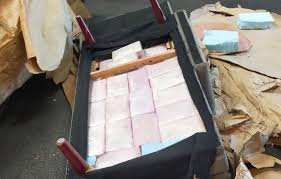
Where To Get Cocaine in Marseilles &
Cocaine in France’s Mediterranean Gateway
Marseilles, France’s second-largest city and historic Mediterranean port, represents one of Europe’s most significant cocaine distribution hubs, characterized by large-scale importation, organized crime dominance, and complex social impacts in a city with profound economic inequalities. The city’s strategic position as Europe’s gateway to North Africa, major port facilities, and historical role in international trafficking have fostered a cocaine market that operates on industrial scale while maintaining deep local consumption. According to the French Observatory for Drugs and Drug Addiction (OFDT), cocaine purity in Marseilles averages 50-70% at retail level, with significant variation between neighborhoods and frequent adulteration in lower-income areas. The market serves both substantial local demand across social classes and functions as France’s primary importation point for cocaine entering Europe via maritime routes, leveraging Marseilles’s port infrastructure, established criminal networks, and connections to source and transit countries. Despite significant law enforcement efforts, cocaine remains deeply embedded in Marseilles’s economy and social fabric, with complex impacts on the city’s already challenging social dynamics.
Historical Development and Port City Legacy/Where To Get Cocaine in Marseilles
Cocaine’s history in Marseilles is inextricably linked to the city’s centuries-old role as Mediterranean trading hub and more recent history with organized crime. During the 1970s, cocaine was present in limited quantities alongside the city’s famous heroin trade, but significant growth began in the 1980s as Colombian cartels established European distribution through Mediterranean ports. The 1990s witnessed expansion as Marseilles-based networks (particularly Corsican groups) developed sophisticated importation methods using the port. A pivotal development occurred in the 2000s with the fragmentation of traditional organized crime and emergence of new networks from the city’s North African communities, creating both competition and innovation in distribution. Since 2010, wastewater analysis has consistently shown Marseilles has among France’s highest cocaine consumption per capita, with stable increases despite economic challenges. The French Drug Report 2025 notes concerning trends for Marseilles specifically: increasing violence between competing networks (with 25 cocaine-related homicides in 2024), rising purity in certain market segments, and the city’s growing role as redistribution center for wider Europe. The market shows extraordinary resilience, adapting to law enforcement pressure while maintaining importation volumes. Where To Get Cocaine in Marseilles. Where To Get Cocaine in Marseilles. Where To Get Cocaine in Marseilles. Where To Get Cocaine in Marseilles. Where To Get Cocaine in Marseilles. Where To Get Cocaine in Marseilles. Where To Get Cocaine in Marseilles. Where To Get Cocaine in Marseilles. Where To Get Cocaine in Marseilles. Where To Get Cocaine in Marseilles. Where To Get Cocaine in Marseilles
Legal Framework and Port Enforcement Challenges
France’s strict drug laws apply in Marseilles, but enforcement faces exceptional challenges due to the city’s role as importation hub and organized crime presence. The Marseilles Judicial Police maintain specialized units focusing on: port interdiction through the OCRTIS (Central Office for the Repression of Illicit Drug Trafficking), organized crime networks, and money laundering through local businesses. Since 2020, there has been increased but still limited cooperation between French authorities and source country agencies, with particular focus on maritime routes from West Africa and the Caribbean. A unique aspect is the historical tension between national agencies and local police, with different priorities and approaches sometimes creating coordination problems. Recent legislative changes have increased penalties for drug trafficking involving minors or occurring in sensitive neighborhoods, particularly relevant in Marseilles’s economically disadvantaged northern districts. Despite France’s significant investment in port security (including advanced scanning technology and K-9 units), interdiction rates remain below 10% of estimated import volume, according to confidential parliamentary reports. The scale of the port (Europe’s fifth-largest) and volume of legitimate trade create exceptional concealment opportunities.
Market Structure and Organized Crime Dominance
Marseilles’s cocaine market operates through sophisticated, vertically integrated networks with connections to international cartels. Wholesale importation exploits the city’s port infrastructure: containerized shipments concealed in legitimate cargo, fishing vessel transfers offshore, and occasionally air freight through Marignane Airport. Mid-level distribution involves networks with distinct territorial control: some dominate specific neighborhoods in the northern districts (particularly the 13th, 14th, and 15th arrondissements), others control distribution to nightlife areas in the city center and southern neighborhoods, others specialize in redistribution to other French cities and European destinations. Street-level distribution occurs through: established dealing spots in specific housing projects, delivery services arranged via encrypted apps with neighborhood-specific operations, social supply within certain communities, and open dealing in some areas despite police efforts. Prices show dramatic variation by neighborhood: premium product (60-70% purity) sells for €60-€80 in affluent southern areas, while standard product (50-60% purity) sells for €40-€60 in northern districts, with occasional “discount” product of questionable quality at lower prices. Since 2022, there has been increasing violence as new networks challenge established groups, particularly in northern neighborhoods.
User Demographics and Cross-Class Consumption
Cocaine use in Marseilles spans remarkably diverse populations reflecting the city’s social segmentation. Primary user groups include: working-class residents in northern neighborhoods (where use has become normalized in certain circles), affluent professionals in southern coastal areas, university students, port and logistics industry workers, and the large tourist population in the Vieux-Port and Panier areas. Consumption settings vary dramatically by social class: working-class users consume in housing project common areas, local bars in northern neighborhoods, and public spaces; affluent users in luxury apartments along the Corniche, upscale bars and restaurants, and private villas; students in university housing and cafes in the Latin Quarter. A distinctive feature is the normalization of cocaine within certain marginalized communities as both coping mechanism and economic opportunity, creating complex social dynamics. Polydrug use patterns show cocaine frequently combined with alcohol (particularly pastis and beer in working-class settings, wine and cocktails in affluent circles) and increasingly with synthetic cannabinoids in certain disadvantaged areas. Wastewater data shows consistent patterns with Friday-Saturday peaks accounting for 65% of weekly consumption, but with less dramatic weekend variation than other French cities, suggesting more consistent daily use patterns in some communities.
Health Services in a Segregated City
Marseilles offers extensive but unevenly distributed health services for cocaine-related issues through both public and private systems. The city hosts multiple public hospitals with specialized addiction services (particularly Hôpital de la Timone and Hôpital Nord), numerous low-threshold centers (CAARUD) in disadvantaged neighborhoods, and private clinics serving affluent clients. Harm reduction services are more developed than in many French cities: supervised consumption facilities operate in several locations, needle exchange programs are extensive, and some overdose prevention training is available. However, distribution is uneven, with northern neighborhoods having better access to some services but facing greater stigma. A significant challenge is the integration of cocaine treatment with broader social services in economically disadvantaged areas, where drug use often intersects with unemployment, housing instability, and mental health issues. Since 2023, there has been increased focus on community-based approaches in northern districts, though resources remain inadequate relative to need. The city’s sharp social and geographic segregation creates parallel healthcare experiences for different populations.
Law Enforcement Strategies and Urban Security Challenges
Marseilles Police employ strategies emphasizing organized crime disruption and neighborhood stabilization. The BAC (Anti-Crime Brigade) and RAID (Research, Assistance, Intervention, Deterrence) units conduct regular operations in known dealing areas, particularly in northern housing projects. Since implementation of the “Marseilles Security Plan” in 2022, there has been increased police presence in sensitive neighborhoods and enhanced coordination between municipal, national, and specialized agencies. Challenges are exceptional: the scale of importation overwhelming enforcement capacity, sophisticated corruption networks, community tensions in policed neighborhoods, and the interconnected nature of cocaine distribution with other criminal activities. A particular focus since 2023 has been financial investigations targeting money laundering through Marseilles’s extensive informal economy and legitimate businesses. Current intelligence suggests networks are increasingly using the city’s growing digital economy and international trade connections to conceal operations. Successes include Operation “Phoenix” in 2024, which dismantled a network importing cocaine via containerized fruit shipments from Ecuador, seizing 800kg and arresting 42 individuals across France and Spain.
Neighborhood and Visitor Safety Considerations
Marseilles’s complex urban geography creates unique cocaine-related safety considerations. First, neighborhood variation is extreme: some areas have open dealing and associated violence, while others have discreet, high-end markets. Second, tourists may encounter dealers in certain central areas, particularly around the Vieux-Port and La Canebière, with risks of adulterated products or scams. Third, the city’s reputation for organized crime violence means drug transactions can involve unexpected risks beyond typical quality or legal concerns. Fourth, medical services are generally good but may involve language barriers and complex navigation of the French healthcare system for international visitors. Fifth, visitors should understand that while certain areas may appear tolerant, enforcement has intensified in recent years due to political pressure around urban violence, resulting in aggressive police operations even in tourist areas. Finally, the port’s role as importation hub means quantities involved in Marseilles are often larger than typical personal use, increasing legal risks for anyone involved beyond casual consumption.
Economic Impact in a City of Contrasts
Cocaine’s economic impact in Marseilles reflects the city’s profound economic and social contrasts. The market’s scale is immense: estimated annual retail value of €150-€250 million in Marseilles alone, with additional economic activity through importation and redistribution. Positive economic effects in disadvantaged areas include: significant illicit employment in distribution networks, money circulation in struggling local economies, and indirect economic activity. Negative impacts are substantial: healthcare costs for treating complications (disproportionately affecting public systems in poor neighborhoods), law enforcement expenditures, lost productivity from addiction, exacerbation of existing inequalities, and damage to Marseilles’s reputation affecting legitimate investment. Policy debates reflect tensions between national prohibition approaches and local realities where cocaine provides economic opportunities in marginalized communities. The current “Marseilles Urban Health Strategy 2024-2028” attempts to balance these with: enhanced treatment and harm reduction in disadvantaged neighborhoods, targeted economic development to provide alternatives to illicit economies, intelligence-led enforcement against violent networks, and improved cross-agency coordination. Implementation challenges include inadequate resources relative to scale, political disagreements about appropriate approaches, and the fundamental difficulty of addressing deeply embedded markets in communities with limited legitimate economic opportunities.
Finding cocaine on the streets haven’t been easy until I got linkup with
Mathewcokehouse@gmail.com they are very friendly and fast. Sells coke and
other stuff at moderate prices, I will always recommend. All you have to do is follow his instructions and I bet you will go back for more
Excellent service de Mathewcokehouse@gmail.com. Ma commande est arrivée à temps, était bien emballée et tout s’est déroulé sans problème du début à la fin. Je recommande vivement ce service à tous ceux qui recherchent une livraison fiable. Le paiement en bitcoins a été très discret.
I was honestly impressed with how fast everything moved. After I made my payment, my delivery arrived in just about an hour. The whole process was quick and smooth, and I was kept informed along the way. Big thanks to Mathewcokehouse@gmail.com for the fast service and prompt delivery. I really appreciate the efficiency and would definitely recommend the service based on my experience.
Mathew is simply the best around the country! Every experience I’ve had with him has been outstanding. He’s reliable, professional, and always keeps his word. Whenever he says delivery will take one hour, he always arrives on time without fail. It’s hard to find someone this dependable these days. I highly recommend Mathew ( Mathewcokehouse@gmail.com) to anyone looking for fast, trustworthy, and excellent service. Keep up the amazing work!
I had an excellent experience with Mathewcokehouse@gmail.com
Everything was delivered by exactly as promised, and the entire process was smooth and reliable. The delivery was on time, and I received everything in excellent condition. I really appreciate the professionalism and great service. Highly recommended!
I highly recommend Mathewcokehouse@gmail.com. He’s a trustworthy person when it comes to cannabis delivery for foreigners. From my experience, he was professional, responsive, and kept me informed throughout the process. If you’re looking for someone reliable, he’s got you covered. Thank you for the excellent service!